


Newspaper Article
Mary Ann Pittingale (Pickingill): 21 days' hard labour for a pair of child's shoes, Suffolk and Essex Free Press, 19 May 1864
- Historical date
- 1864
- Location
- Rochford, Essex
- Category
- Newspaper Article
- Source
- British Newspaper Archive
- Contributed by
- William Wallworth
- Added to the archive
About this item
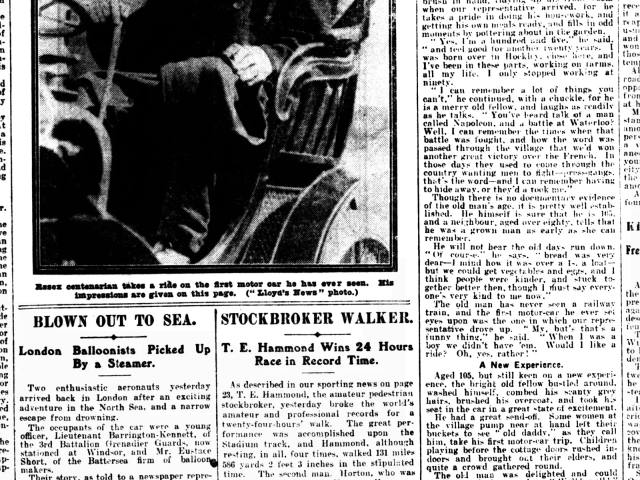
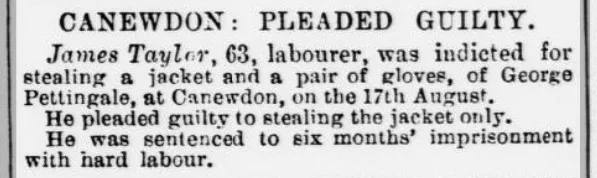
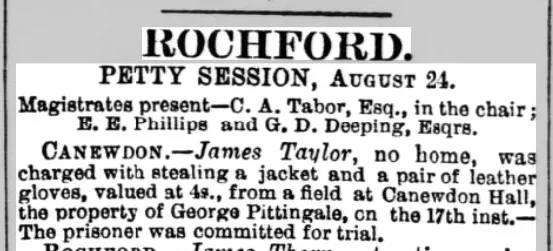
Suffolk and Essex Free Press, Thursday 19 May 1864, page 4. Local police reports, Rochford, 12 May 1864: "Mary Ann, wife of George Pittingale, of Eastwood, labourer" is charged with stealing a pair of child's shoes, worth one shilling, from Henry Brown's shop in Rochford on 2 May. The shoes were found in her basket as she left. She agreed to be dealt with by the magistrates and was given 21 days' hard labour. Eighteen months earlier she had been fined for taking potatoes. The two cases show how poor the Pickingill household was. George Pickingill (1816-1909), farm labourer of Canewdon, Essex, was remembered in the village as a cunning man, and Eric Maple's writing in the 1960s made him the best-known figure of the Canewdon witch traditions. The newspapers of his lifetime spell the name Pittingale, Pettingale and Pickingale. One of a set of documents on him found by William Wallworth. Only the Pittingale case is transcribed. The small crop is the paragraph itself; the full page follows.
How to cite: 'Local Police Reports. Rochford, May 12', Suffolk and Essex Free Press, 19 May 1864, p. 4 (British Newspaper Archive). Alexandrian Witchcraft Timeline & Archive.
Transcript
Local Police Reports.
ROCHFORD MAY 12.
(Before Revds, T. S. Scratton and W. Twyne; James Tabor, A. Tawke, and E. J. Disney, Esqs.)
(among other cases mentioned but not transcribed here)
Mary Ann, wife of George Pittingale, of Eastwood, labourer, was charged with stealing a pair of child’s shoes, valued at 1s., from the shop of Henry Brown, of Rochford, on the 2nd May. -- The prisoner was detected in the act, and the shoes were found in her basket when leaving prosecutor’s shop. -- Prisoner consented that the charge might be dealt with before the magistrates, and she was committed for 21 days’ hard labour.
Suggest a correction
Spotted a mistake, or read the handwriting differently? Offer a corrected transcript.
Log in or create a free account to transcribe this item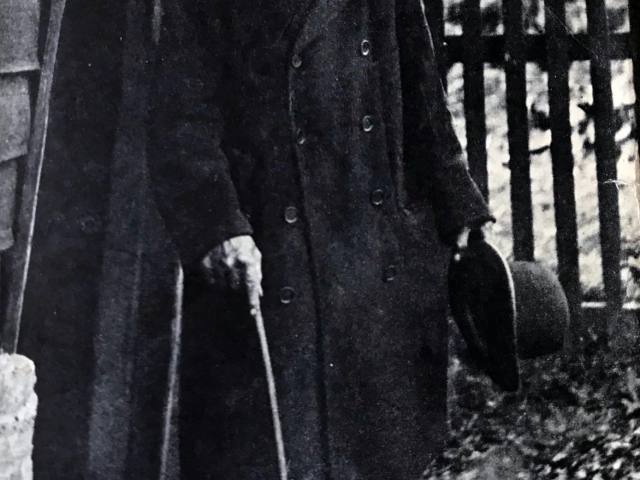

No comments yet