


Newspaper Article
'The oldest man in Essex. Canewdon patriarch, aged 105': George Pickingill, The Essex Weekly News, 18 September 1908
- Historical date
- 1908
- Location
- Canewdon, Essex
- Category
- Newspaper Article
- People
- George Pickingill
- Source
- Newspapers.com
- Contributed by
- William Wallworth
- Added to the archive
About this item
The Essex Weekly News (Chelmsford), Friday 18 September 1908, page 6. The county paper follows Lloyd's five days later with its own account of "Mr. Frederick Pickingale" of Canewdon, and a portrait "from a photograph by Mr. Lindsay, Rochford". It adds details the London paper did not have: that he worked as a young man at Prittlewell Priory, moved to Canewdon about seventy years before, has lived in the same cottage for forty years, and that his wife died twenty-two years ago. He rises at eight, keeps house and garden for himself and his son, and puts his age down to "a quiet, abstemious life". The Waterloo and press-gang memories are repeated from Lloyd's.
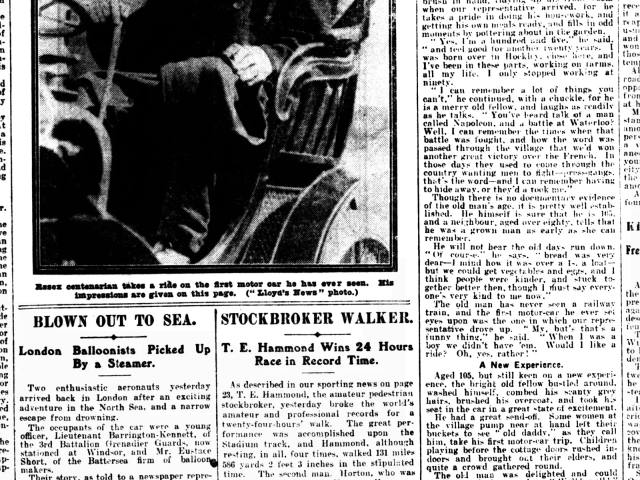
"Frederick" is George Pickingill (1816-1909), in fact about 92. As with the Lloyd's article, there is no word of witchcraft. One of a set of documents on him found by William Wallworth. Cropped to the article, with the portrait and the full page.
How to cite: 'The Oldest Man in Essex. Canewdon Patriarch, Aged 105', The Essex Weekly News, 18 September 1908, p. 6. Alexandrian Witchcraft Timeline & Archive.
Transcript
THE OLDEST MAN IN ESSEX,
CANEWDON PATRIARCH, AGED 105.
Canewdon, a picturesque village about ten miles from Southend, boasts the distinction of having amongst its residents one of the oldest of the King’s subjects in the person of Mr. Frederick Pickingale, who is 105 years of age and is still hale and hearty.
Mr. Pickingale was born at Hockley, and when a young man worked as a farm hand at Prittlewell Priory. About 70 years ago he removed to Canewdon, where he continued to work on the land until he was 90. He has never been outside the district, and has resided in the same cottage for the past 40 years. His wife died 22 years ago, and since then he has shared his humble dwelling with his only son.
Notwithstanding his great age, the old gentleman gets up regularly at eight o’clock, and is responsible for the care of the cottage and the preparation of the meals for
[ photograph of Frederick Pickingale ]
himself and his son. He also looks after the garden; and he attributes his great age to the fact that he has lived a quiet, abstemious life. He has never had any sickness, but he remembers being laid up on one occasion as the result of an accident sustained whilst loading tares. His eyesight and hearing are still good, and he still enjoys a pipe of tobacco and a glass of ale.
Mr. Pickingale has never seen a railway train, and until a few days ago had not seen a motor car. To an interviewer, the old fellow smilingly said: -
“I can remember a lot of things you can’t. You’ve heard talk of a man called Napoleon, and a battle at Waterloo?” Well, I can remember the times when that battle was fought, and how the word was passed through the village that we’d won another great victory over the French. In those days they used to come through the country wanting men to fight - press gangs, that’s the word - and I can remember having to hide away, or they’d a took me.”
Contrasting the past with the present time, he added, “Of course, bread was very dear - I mind how it was over 1s. a loaf - but we could get vegetables and eggs, and I think people were kinder and stuck together better then, though I must say everyone’s very kind to me now.”
Our portrait of Mr. Frederick Pickingale is from a photograph by Mr. Lindsay, Rochford.
Suggest a correction
Spotted a mistake, or read the handwriting differently? Offer a corrected transcript.
Log in or create a free account to transcribe this item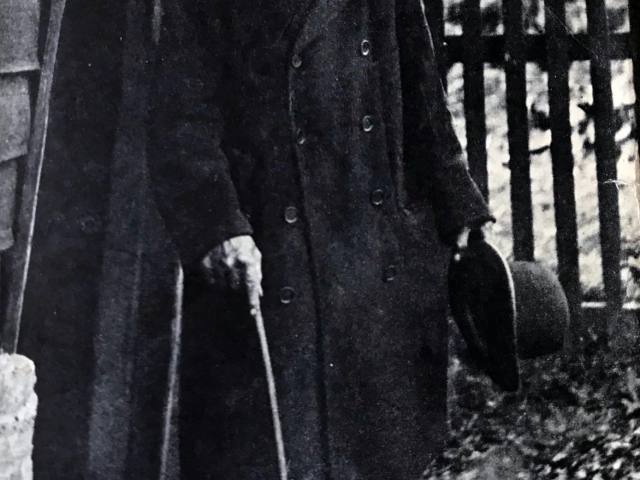
No comments yet