


Magazine
Canewdon, "The Witch Country", by Eric Maple, Man, Myth and Magic, 1970
- Historical date
- 1970
- Location
- Canewdon, Essex
- Category
- Magazine
- Source
- Man, Myth and Magic, vol. 3, pp. 401-402 (BPC Publishing Ltd, 1970). Copy supplied to William Wallworth by Cody Sim
- Contributed by
- William Wallworth
- Added to the archive
About this item
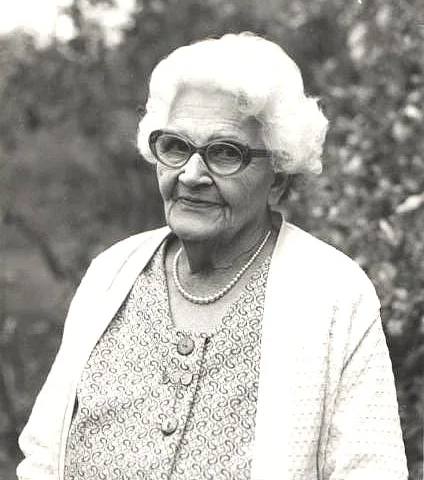
Eric Maple's entry on Canewdon, Essex, for the illustrated encyclopedia Man, Myth and Magic: the six witches who must live there as long as the church tower stands, the last "Master of Witches" George Pickingale (Pickingill), who died in 1909, the white-mouse familiars, witch bottles, and the six women named as witches in the 1880s, drawn from Maple's survey of 1958 to 1961. The colour photograph is captioned only "A Canewdon villager with the church tower in the background". William Wallworth believes she is most likely Lilian May Garner (1890-1982), "Granny Garner", Maple's main informant; the page does not name her. Pages 401 and 402, with the photograph cropped. With thanks to Cody Sim, who sent William the article.
How to cite: Eric Maple, "Canewdon", Man, Myth and Magic, vol. 3, pp. 401-402 (BPC Publishing, 1970). Alexandrian Witchcraft Timeline & Archive.
Transcript
[Page 401]
In the remote Essex village of Canewdon, there are still old people who remember how witches could be seen riding to their meeting place on moonlit nights.
CANEWDON
‘THE WITCH COUNTRY’ is the name given locally to the parish of Canewdon in Essex; the village is renowned for many miles around and is a legend in its own right. Although today it is rapidly becoming urbanized, it was within living memory isolated both geographically and socially, due to its remote situation on the fringe of the Essex marshlands and to its reputation as a centre of witchcraft.
According to an old tradition, as long as the church tower stands there must always be six witches in Canewdon under a master of witches: ‘three in silk and three in cotton, one being the parson’s wife, one the butcher’s wife and one the baker’s wife.’ When the last witch dies, the legend says, the tower is doomed to fall; conversely when the tower falls, the last witch will die. That this tradition survived until well into the 20th century is verified by innumerable written and oral accounts, as is the custom performed until recently in which the village children danced seven times around the church as a precaution against witchcraft.
There are still old villagers even today who prefer not to pass near the crossroads at night. It is said that a witch was once buried there with a stake driven through her heart, and her headless ghost has been known to emerge as a shadowy cloud from the churchyard and make its way along the road leading to the distant river.
Another well-known Canewdon legend is that of the witch who rowed across the local river in a stolen church bell, using feathers as oars. Her unwieldly craft capsized and the tolling of the bell has on rare occasions been heard from deep beneath the water. On the river’s edge there was once a barren patch long known as the witches’ field, where the witches were believed to meet to renew their powers. The very old still tell how on moonlit nights the witches could be seen riding to their rendezvous on the river bank.
The Witch Master
The last ‘Master of Witches’ was George Pickingale, a farm labourer who died in 1909, passing on his powers to his son, in whose hands they apparently atrophied, for little more is heard of them. Pickingale was reputed to possess the power to summon the local witches by means of a wooden whistle, and to halt farm machinery with one glance from his fierce and somewhat glassy eyes. He was adept at charming warts and was occasionally called in to arbitrate in a wages dispute. The more superstitious villagers up to a decade ago remembered how he would sit idly smoking his pipe while a bevy of imps worked for him.
Pickingale blended the qualities of both the black and the white magician. In his capacity of village wise man, his aid was sought for social purposes, but he exploited his reputation as a wizard to the full, coercing neighbours into drawing water for him from the village well, and using the threat of black magic to secure forced tributes of beer. Following his death at the age of 93, his cottage long remained untenanted, possibly from fear of his familiars, ‘the little old white mice’, which were said to haunt the premises, peering out of the darkness with red staring eyes.
[Photograph, credited Transworld Feature Syndicate. Caption:] A Canewdon villager with the church tower in the background. According to an old tradition, as long as the tower stands, there will always be seven witches in Canewdon, and the village is the centre of many stories of witches
Almost as remarkable, and far more dangerous, were the powers accredited to the last six witches of Canewdon who must have lived in the 1880s, and who were doubtless perfectly innocent victims of parochial vindictiveness. According to statements recorded during a survey carried out between 1958 and 1961, these were described as follows. Mrs W was a cripple who cast spells and was loathed for her venomous temper. Mrs K used to fix passers-by with her glaring eyes, and prevented them from entering church. Mrs L was an eccentric who inflicted plagues of lice upon those who offended her. Another Mrs L betrayed herself as a witch by refusing to step over a doormat under which a steel knife had been laid. Mrs C was a woman renowned for bewitching waggonwheels and known to possess imps. Mrs M was a not unkind woman but one who occasionally terrified her neighbours by materializing spectrally at their bedsides in the dead of night, peering fiercely from beneath a poke bonnet.
The activities of these sinister women were embodied in a wealth of macabre legends, no doubt passed down the generations for centuries and attached to one bevy of suspects after another.
The White Mice
The Canewdon witches had the power of the Evil Eye and a single glance could immobilize a victim for hours on end, or even bring traffic to a halt. I am indebted to Mr Witcutt, late Rector of Foulness Island for the following anecdote. A waggoner had refused to buy beer for a Canewdon woman and afterwards his horses were unable to move. He used the whip on them but they would not budge. His mate said, ‘No use hitting the horses, mate, hit the wheels. It’s the old girl in there.’ And he hit the wheels and she emerged from them screaming, with the marks of the whip on her face. The belief that a witch could transform herself into a wheel was once very general.
Canewdon must have been one of the last places in the British Isles where the witches’ familiar survived in folk belief, although cases did occur in mid-19th century Norfolk and Suffolk. The familiar peculiar to the Canewdon witches – the white mouse – is only rarely referred to in the witch trials of the 17th century, but the legends in which these animals were mentioned indicate that not only were they the repositories of the witches’ power but that they were passed down the generations from one witch to her successor. At the close of the last century several of the legends of Canewdon began to reflect the rapid decline in the belief in witchcraft. An old woman suffering on her deathbed found it impossible to die until she had passed on her powers. She finally gave a low whistle and a number of white mice emerged from a box. She was then able to die in peace.
According to another legend, white mice refused to leave the body of a dead witch, and could only be disposed of by nailing them in the coffin with their mistress. A significant legend from the same area describes the burning of the imps as the sole means of breaking the grim entail.
Canewdon was obviously the ideal place for an intensive witch-hunt and there are traditions of suspected witches having been ducked in the village pond. Fortunately for potential victims of spells the local people were adepts in white magic, their domestic charms against witchcraft consisting in the main of knives and scissors placed under doormats. The village layer-out of the dead, a notable seer, was also available in cases requiring the help of the specialist, largely because of her skill in the preparation of ‘witch bottles’. These were bottles containing the hair, blood and urine of a victim of witchcraft which were boiled on the cottage hearth at midnight in order to betray the witch by ‘drawing her’ to the scene of her crimes. By the turn of the present century jam-jars containing urine had replaced the elaborate brew of earlier years.
[Page 402]
The Head at the Window
A once common legend relates to the perpetual pursuit of the parish priest of Canewdon by Satan, whom the former always managed to elude since the Devil invariably entangled his tail in the hedgerows of the narrow winding lanes. An old farm known as the Tile Barn, which once stood on neighbouring Wallasea Island on the fringes of the parish, was long believed to be haunted by an invisible entity which made known its presence by emanating an ice-cold atmosphere; on one occasion a black head complete with horns was observed peering from an upper window.
The overall effect of this body of traditions tended to reduce the number of visitors to Canewdon to a minimum, as well as to endow local humour with the somewhat macabre flavour for which it has become renowned. A popular story which is no doubt still told today concerns an observation made by a villager who, upon learning that a child had been born with a full set of teeth, muttered, ‘My God! we’ll have werewolves here next.’
Many strange superstitions have persisted in the Essex marshlands which, until comparatively recent times, were the homes of fever-ridden, narrow-minded and somewhat belligerent country labourers and fishermen. It was not difficult to believe, at Canewdon, that a headless ghost walked nightly along the river wall or that the local sweep, who was extremely tall and thin and never removed the soot from his face, had some affinity with the Devil. This type of tradition was not, of course, peculiar to Canewdon but the importance of the Canewdon story comes from the light it sheds on the superstitious beliefs of another age, treasured in the folk memories of unlettered labourers in a remote corner of the English countryside.
There is perhaps nothing quite like Canewdon in the annals of witch belief, for it provides the modern investigator with a window into a dark, forgotten world.
ERIC MAPLE
FURTHER READING: J. Wentworth Day, Here are Ghosts and Witches (Clark, Irwin, 1964); Eric Maple, The Dark World of Witches (A. S. Barnes, 1964).
Suggest a correction
Spotted a mistake, or read the handwriting differently? Offer a corrected transcript.
Log in or create a free account to transcribe this item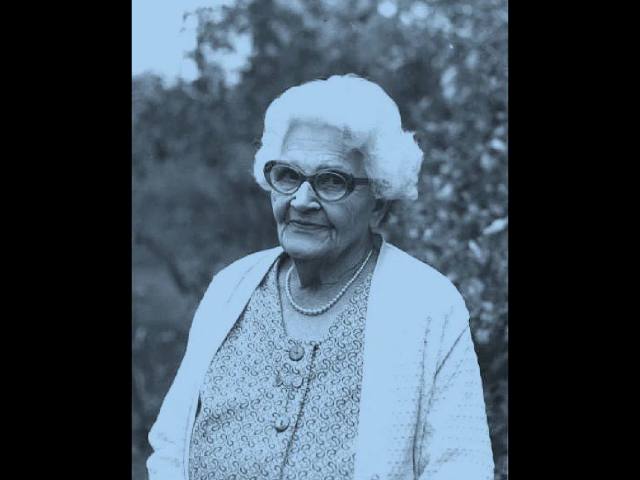


No comments yet